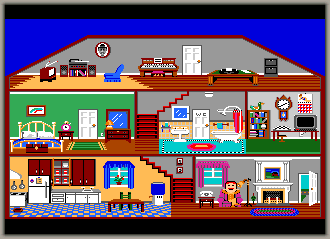
Between the release of LCP and The Sims came SimCity, a "system simulation" game released in 1989. In this game, you are able to create cities populated by "simulated citizens," and have full control and authority over the city's development. SimCity has no final objective or goal planted in it, but the appealing challenge is to build a city, perhaps your ideal city, that is able to sustain itself through the simulation. You want successful industries, an attractive lifestyle, happy people, and tax revenue so you can further develop the city.
Then after, came "The Sims", "The Sims 2", and more recently, "The Sims 3." These are life simulation games in which you create simulated people, or Sims, move them into a house or build one yourself, and then control their actions throughout the stages of their lives. In the most recent installment, The Sims 3, there is no concrete objective other than optional fulfillment of the “Lifetime Wish” you select in “Create a Sim” mode. It is beneficial, however, for your Sim to develop skills associated with that wish, or undertake a job that relates to it, because you will gather more lifetime happiness points and be able to purchase special abilities for them. There is a separate currency, called “Simoleans” that the Sims make from work and that you use to purchase basic commodities and furniture, and build houses.
 You can choose to create your Sims or use a set of pre-made families. The “Create a Sim” function, however, is so comprehensive and multifaceted that it enables one to almost accurately represent a person from real life, both physically and mentally. Physical traits can be customized from weight to the color of hair roots and tips, and mental aspects, from favorite food to a set of five different personality traits, which could include “hot headed” or “charismatic.” This wide range of customization options is one of the appealing aspects of the Sims series, and is also reflected in the amount of options and flexibility you have in designing their homes.
 Another aspect of the Sims 3 that one might find attractive is the fictional narrative behind your characters; though it is simulated, the story can be engaging and yet realistic and relatable to some degree. Players see it as a more interactive, entertaining, and definitely engaging activity than perhaps writing a story or reading a comic. This can greatly fuel "escapism", a large attraction for any life simulation game, defined as a "habitual diversion of the mind to purely imaginative activity or entertainment as an escape from reality or routine." Other players may also seek to project people and situations from their own life into the Sims in an idealistic but nonexistent way. Because the game is so absorbing, it is important to raise the question of whether living in an idealistic world improves or worsens actual life. From reading posts on the Sims 3 community site, it seems that routine escapism, possibly to a virtual world they find favorable to their actual reality, can prevent people from taking steps to solve issues present within their lives. In addition, many people use cheat codes to rack up millions of Simoleans in the game, which can support the highest standards of luxury, and is unrealistic. However, it’s also important to question whether absorption in a life-simulation game can have positive effects. In the Sims 3, for example, improving in skills associated with a Sim’s academics or job will greatly boost their confidence about work, happiness level, and actual improvement within that field. This purely logical nature of the game may motivate some people to take constructive action to improve their lives, or reconsider their priorities.

No comments:
Post a Comment